
Oracle Integration Cloud (OIC): Definition, Evolution, and Why 2026 Is a Turning Point
OracleERPGuide (OEG) Launched Oracle Integration Cloud Instance in February 2026
OracleERPGuide (OEG) launched a dedicated Oracle Integration Cloud instance in February 2026. Learners can use the OIC instance to explore the platform and get familiar with its core features. Hands-on training and real-world integration exercises will be rolled out in upcoming sessions.
If you are building broader Oracle Cloud skills around integration, this topic pairs well with the career planning in Oracle Certification Learning Paths 2026 and the UI extension perspective in Oracle Redwood 2026 Guide Using VBS. If you want structured hands-on practice instead of only theory, the Oracle Integration Cloud Training is the most relevant next step.
What Is Oracle Integration Cloud (OIC)?
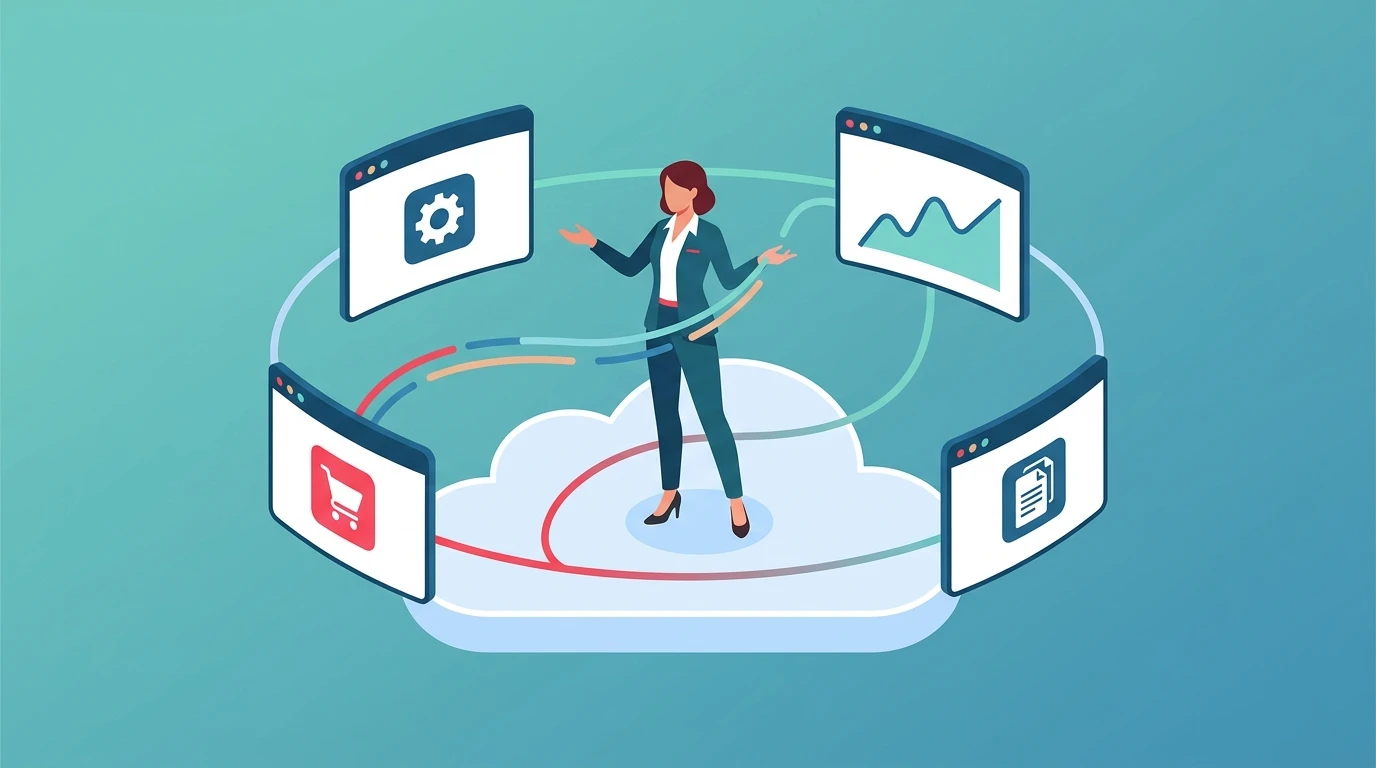
Oracle Integration Cloud (OIC), also known as Oracle's cloud integration platform, is a cloud-based Integration Platform as a Service (iPaaS). It is designed to connect applications, automate business processes, and manage data flows across Oracle Cloud applications, third-party SaaS platforms, and on-premises systems through a low-code visual development model.
In simple terms, Oracle Integration Cloud is the integration backbone of the Oracle ecosystem. It is the standard platform used for integration across Oracle environments, enabling connectivity between Oracle Fusion ERP, HCM, SCM, CX, legacy systems, and external applications. The OIC full form in Oracle is Oracle Integration Cloud.
Oracle positions the platform as Oracle Integration, and the official product reference is maintained in the Oracle Integration documentation. Those sources are useful when you want release-specific behavior, adapter coverage, and environment administration details alongside this high-level guide.
Oracle Integration Cloud: Official Enterprise Definition
Oracle Integration Cloud Service is a comprehensive integration solution that runs natively on Oracle Cloud Infrastructure integration services, providing a secure and scalable foundation for enterprise integration.
It supports:
- Application integration
- Oracle Integration Cloud process automation
- B2B and EDI integrations
- API creation and lifecycle management
- Secure file transfer and managed file server
- Hybrid cloud and on-premises connectivity
Oracle Integration Cloud bridges legacy systems with modern cloud applications, enabling real-time and scheduled integrations without heavy custom coding.
Launched Now: OIC Instance on OracleERPGuide
We are excited to announce that the dedicated Oracle Integration Cloud instance is now live on our portal. Learners can explore the OIC instance for practice and familiarize themselves with Oracle Integration Cloud features. Hands-on training and real-world integration exercises using this instance will be introduced in upcoming sessions.
SaaS, PaaS, and IaaS: Where Oracle Integration Cloud Fits
In cloud computing, IaaS, PaaS, and SaaS represent different service layers:
- Infrastructure as a Service (IaaS) provides raw computing resources such as servers, storage, and networking, while customers manage operating systems and platforms.
- Platform as a Service (PaaS) sits on top of IaaS and offers a managed platform where developers can build, deploy, and run applications without worrying about infrastructure.
- Software as a Service (SaaS) delivers fully built software applications to end users over the internet. Examples include Oracle Fusion ERP, HCM, Salesforce, and other enterprise SaaS platforms.
Oracle Integration Cloud is a PaaS service, specifically an iPaaS platform, built to connect SaaS applications, on-premises systems, and cloud services. Unlike SaaS platforms, which focus on business functionality, OIC provides the integration, automation, and orchestration layer that allows SaaS systems to work together.
In this context, the difference is straightforward:
- SaaS delivers the application.
- PaaS platforms like OIC provide the platform to build integrations, APIs, and workflows.
Compared to IaaS, where teams manage infrastructure directly, OIC abstracts that complexity and accelerates delivery.
Core Capabilities of Oracle Integration Cloud
1. Application Integration
Oracle Integration Cloud Service enables application-to-application connectivity using prebuilt Oracle Cloud adapters and third-party adapters.
Supported adapters include:
- Oracle ERP Cloud
- Oracle HCM, SCM, and CX
- Salesforce, SAP, ServiceNow, and NetSuite
- REST Adapter, SOAP Adapter, FTP Adapter, and Database Adapter
Supported integration styles in OIC include:
- App-driven integrations
- Basic routing
- Scheduled integrations
- Publish/subscribe
All integrations are built using a visual drag-and-drop low-code designer, making Oracle Integration Cloud Generation 3 suitable for both technical and techno-functional users.
2. Oracle Integration Cloud Process Automation
Oracle Integration Cloud process capabilities allow enterprises to automate end-to-end workflows across systems.
Key features include:
- Human tasks and approvals
- Business rules
- Process Lab for orchestration
Common Oracle Integration Cloud process use cases include hire-to-retire, order-to-cash, and finance approval workflows.
3. B2B Integration
Oracle Integration Cloud Enterprise supports secure B2B transactions using EDI standards such as X12 and EDIFACT, AS2 protocol, and trading partner management for high-volume, secure data exchange.
4. File Server and Managed File Transfer
Oracle Integration Cloud Service includes secure file movement, scheduling, monitoring, large payload handling, and hybrid file-based integrations.
5. API Management
Oracle Integration Cloud allows organizations to create, publish, secure, and monitor APIs with controlled exposure for internal and external consumers.
Oracle Integration Cloud Architecture Components
Oracle Integration Cloud architecture includes:
- Adapters
- Connectivity agents for on-premises access
- Integration runtime
- Monitoring dashboards
- Lookups
- Packages for versioning
- Optional Visual Builder
- Optional Insight for real-time KPIs
Types of Integration in OIC
Types of integration in OIC include:
- Application-driven integrations
- Scheduled integrations
- Event-based integrations
- API-led integrations
- File-based integrations
Common Enterprise Use Cases of Oracle Integration Cloud
Oracle Integration Cloud Enterprise is commonly used to:
- Sync Oracle ERP with CRM systems
- Integrate eCommerce platforms with backend ERP
- Automate onboarding and payroll
- Enable B2B supplier exchanges
- Expose APIs
- Feed real-time data to Oracle Analytics Cloud
Why Oracle Integration Cloud Matters in 2026
By 2026, Oracle Integration Cloud is no longer just a nice-to-have integration tool. It has become a mission-critical enterprise integration platform. With Oracle's growing AI-first cloud strategy, multicloud adoption, and deeper enterprise SaaS deployments, OIC now serves as the backbone connecting Oracle Fusion ERP, HCM, SCM, CX, and external applications.
For professionals, hands-on experience with OIC instance access and Oracle Integration Cloud features is increasingly important for career growth. Organizations are looking for individuals who can configure integrations, design end-to-end workflows, automate business processes, and manage data flows across hybrid environments.
Skills in Oracle integration, combined with knowledge of Oracle Fusion applications, PL/SQL, or functional expertise in finance and HR, make professionals highly valuable in the market.
Mastering Oracle Integration Cloud opens pathways to roles such as:
- OIC Developer
- Integration Consultant
- Solution Architect
- ERP Integration Lead
- Program Integration Manager
How Oracle Integration Cloud Is Changing in 2026
Quarterly Release Model and Enterprise Governance
From January 2026, Oracle Integration 3 adopted a predictable quarterly release cycle. Release 25.08 was skipped, features were consolidated into 25.10, and quarterly releases are active from Oracle Integration Cloud Generation 3 and 26.01 onward.
Separate maintenance schedules now exist for development and production OIC instances, allowing better upgrade planning and compliance.
AI Advancements in Oracle Integration Cloud (26.01)
Oracle Integration Cloud Generation 3 introduced AI agents with conversation IDs, prompt templates, and improved reasoning patterns. AI-assisted development now supports REST Adapter configuration, mapping recommendations, and OpenAI file operations. OCI Vision, Language, and Document Understanding also support custom models.
Expanded Oracle Cloud Adapters
New Oracle Cloud adapters include the NetSuite RST Adapter, the OpenSearch Adapter for retrieval-augmented generation, and vector search support in Autonomous Transaction Processing, improving AI-driven and analytics integrations.
Platform Resilience and Governance
Oracle Integration Cloud enhancements include expanded integration recipes, OCI Log Analytics for large payloads, AI-assisted integration creation, and improved disaster recovery.
RPA and Automation Enhancements
Oracle Integration Cloud now supports robot execution in air-gapped environments, adaptive polling, and stronger enterprise automation.
Deprecations and Migration Signals
WSDL-based Salesforce connections and legacy security policies are deprecated, signaling a clear shift toward modern API-first integrations.
Oracle Integration Cloud in Oracle's 2026 Strategy
Oracle Integration Cloud aligns with Oracle's AI-first cloud strategy, multicloud interoperability, industry clouds, and OCI global expansion. OIC acts as the integration backbone for Oracle AI, ERP, and analytics platforms.
Oracle Integration Cloud as a Career in 2026
Market consensus shows that Oracle Integration Cloud combined with Oracle Fusion skills remains highly valuable. Demand is driven by deep Oracle Fusion adoption, continuous integration needs, and the scarcity of techno-functional professionals.
Ideal backgrounds include:
- Oracle ERP
- Finance
- PL/SQL
- PeopleSoft
- Functional consultants transitioning to cloud roles
Career paths include:
- OIC Developer
- Integration Consultant
- Solution Architect
- ERP Integration Lead
- Program Integration Manager
What OracleERPGuide Will Offer
From launch onward, learners will have access to the OIC instance for practice and familiarization with Oracle Integration Cloud. Structured tutorials, real-world use cases, and career guidance will be rolled out in upcoming sessions.
OIC Instance Access and Hands-On Training
To support practical learning, OracleERPGuide will provide hands-on Oracle Integration Cloud training and practice environments. Details for OIC instance creation, provisioning, login, and exercises will be shared progressively after the February 2026 launch.
Why This Launch Matters
Oracle Integration Cloud has become the default enterprise integration layer for Oracle Fusion applications. With predictable quarterly releases, AI-driven capabilities, and deep Oracle SaaS adoption, OIC is now a critical skill for Oracle professionals.
OracleERPGuide's OIC instance launch is designed to bridge the gap between:
- Documentation and real-world implementation
- Theory and hands-on practice
- Functional knowledge and integration architecture
OracleERPGuide's Focus
The goal is simple: provide clear, practical, and enterprise-relevant Oracle Integration Cloud knowledge, from beginner fundamentals to advanced integration design, without marketing noise or superficial coverage.
Final Takeaway
Oracle Integration Cloud in 2026 is mature, AI-powered, predictable, and enterprise-critical. For Oracle professionals, this is an ideal time to explore and gain hands-on exposure. OracleERPGuide launched a dedicated OIC instance in February 2026, with structured training and real-world integration exercises coming soon.
If you want to move from definitions and release updates into live integration builds, review the Oracle Integration Cloud Training. It is the fastest way to turn OIC concepts into practical REST, SOAP, FTP, ATP, BIP, and FBDI work.