
Overview
Oracle PPM Cloud's Project Execution Management (PEM) module is designed to help organizations plan, execute, and deliver projects efficiently. Unlike Project Financial Management, which focuses on budgets, accounting, and billing, PEM is centered on work planning, resource allocation, task dependencies, and project delivery. Oracle covers this capability in its Using Project Execution Management documentation, where PEM is positioned around project planning, scheduling, issues, deliverables, and collaboration.
This guide walks through the core concepts of PEM, including the project execution lifecycle, common setup options, administrative roles, and how project roles are structured within the module. If you are also mapping the broader Oracle PPM landscape, you may want to compare PEM with the main Oracle Fusion PPM training and related topic pages such as Oracle PPM Grants Management and Oracle PPM Cross Charge and Intercompany Billing.
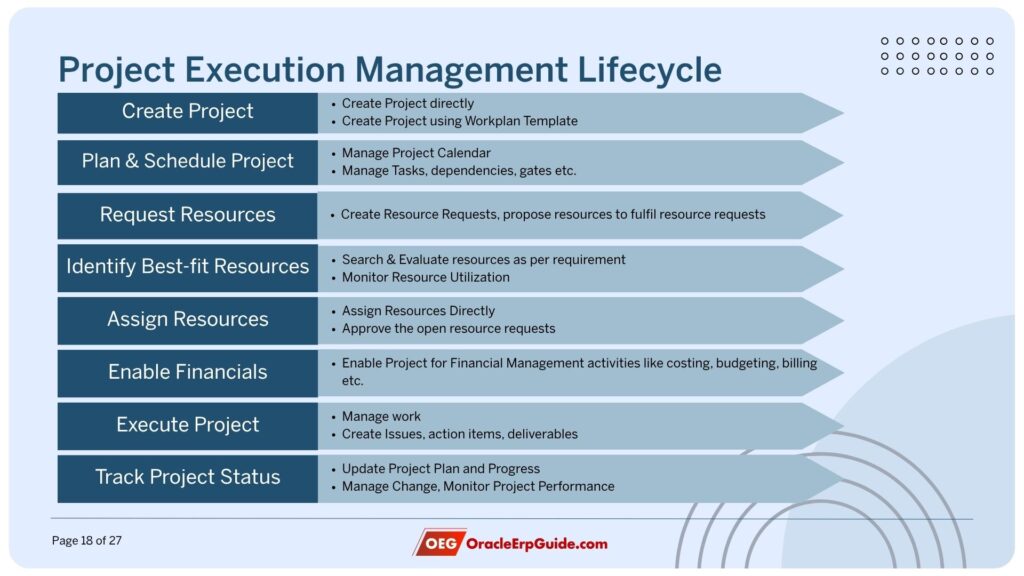
Project Execution Management Lifecycle
Execution management allows projects to be created either from scratch or using a work plan template, offering flexibility unlike financial management, which requires a project template tied to a work breakdown structure. Once created, projects can be saved as templates for future use. The focus is on work planning, resource allocation, and task dependencies, with no involvement in financial aspects like accounting entries. Key stages include defining milestones (e.g., User Acceptance Testing sign-offs) and managing resource requests based on skill sets. Resource utilization is tracked to ensure optimal allocation, impacting performance evaluations.
Issues such as scope changes, resource unavailability, or client-requested modifications are documented and addressed to keep the project on track. Progress is monitored through deliverables and expressed as a percentage of completion. Significant changes are managed through change orders, which may also impact the project budget. Overall, execution management ensures that projects are completed on time, within scope, and within budget, with a focus on key elements like resource management, project rules, and calendars for smooth project delivery. When a project later moves into the financial side of PPM, that handoff typically connects back to Project Financial Management for budgeting, billing, costing, and revenue processes.
Common Project Execution Management Options
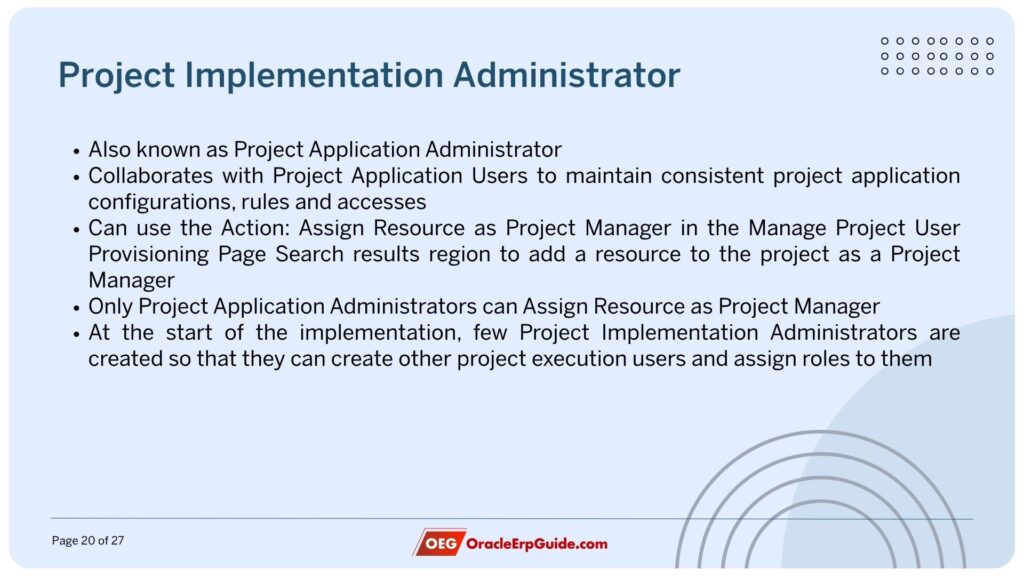
In Project Execution Management (PEM), one of the key roles is the Project Implementation Administrator, responsible for managing user provisioning, project rules, project and resource calendars, and project enterprise resources. This role is distinct from the Project Administrator in Project Financial Management (PFM), which focuses on creating projects within financial management. The Project Implementation Administrator, sometimes referred to as the Project Application Administrator, has a broader scope in PEM, and it's important not to confuse the two. The role provides access to all PEM setups, enabling the administrator to complete setups, create users, and designate some of them as project managers. Oracle lists these tasks in its common project execution options.
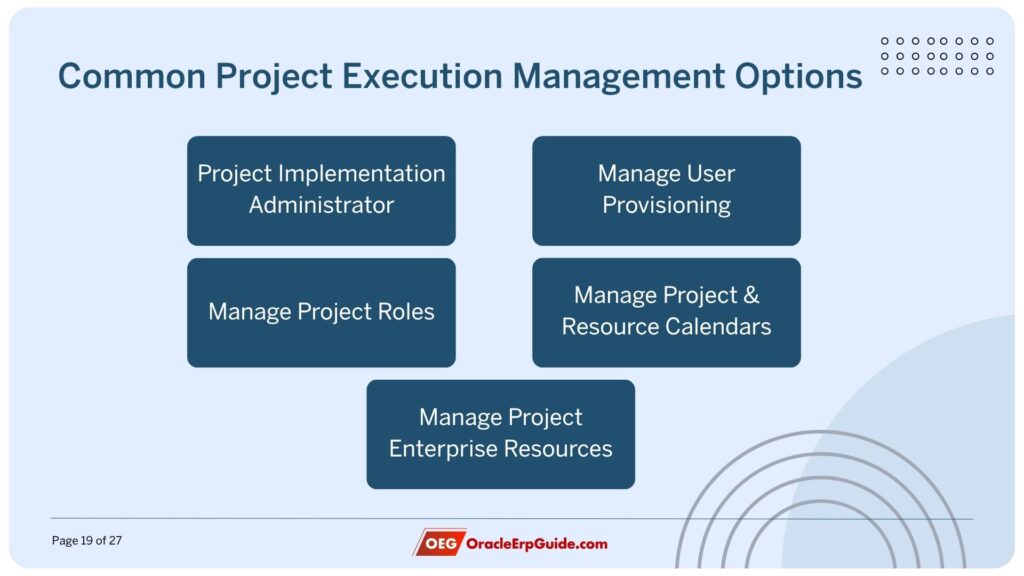
In addition to these tasks, the Project Implementation Administrator is involved in user provisioning, which is the process of creating user accounts for PEM resources. Another critical responsibility is creating project rules, which differ from financial management rules. While financial management includes roles like Project Administrator and Project Accountant, PEM includes roles such as Project Team Member, Project Manager, and Project Executive. The role also manages project and resource calendars, which should not be confused with accounting calendars. Finally, project enterprise resources — a term Oracle uses for project resources — are necessary to work within PEM. Only individuals designated as project enterprise resources can engage in PEM projects, making this a crucial prerequisite for working in the Project Execution Management module.
Roles in Project Execution Management
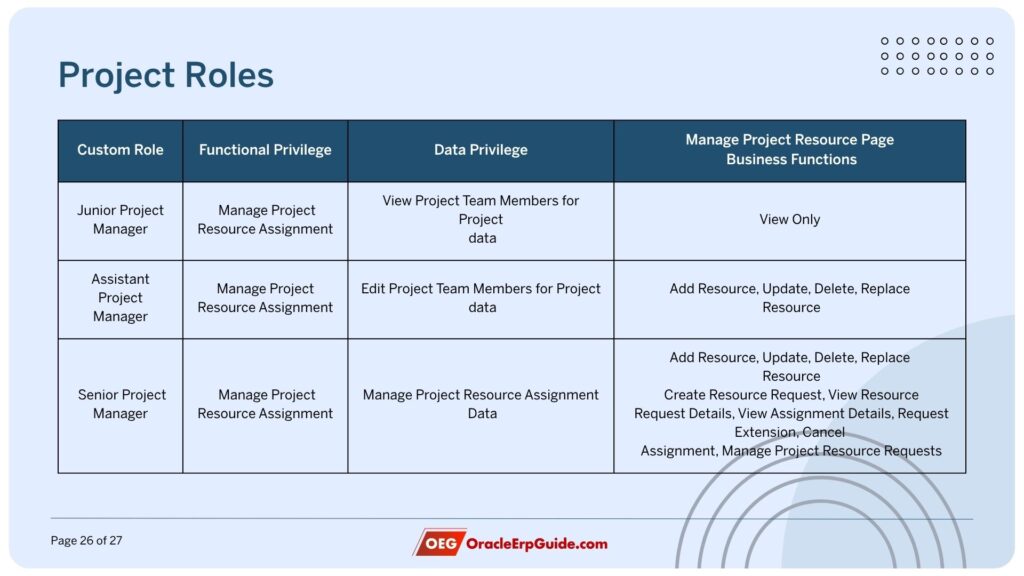
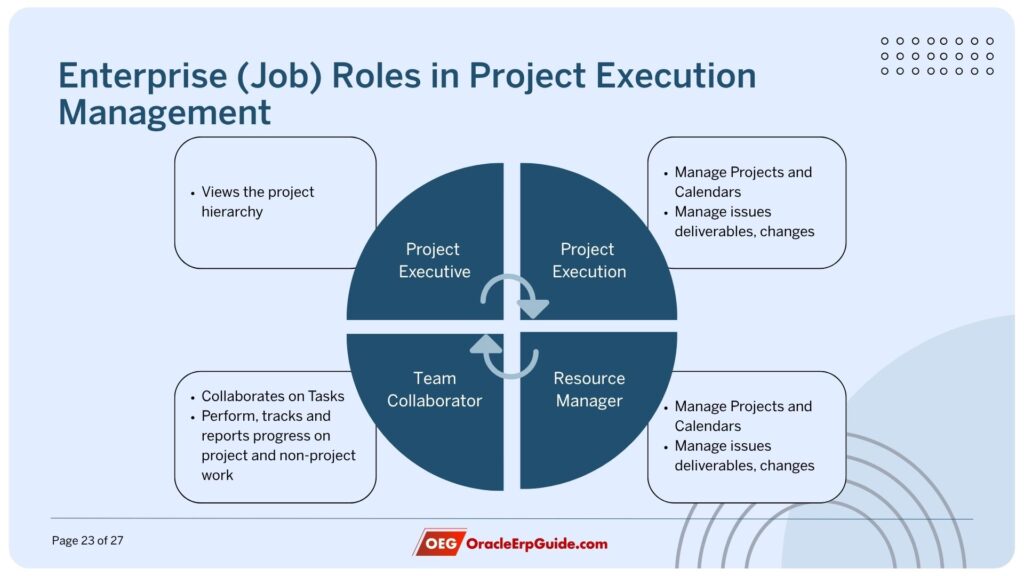
In Project Execution Management (PEM), roles define responsibilities and access within a project, distinct from roles in Project Financial Management (PFM) like Project Accountant or Billing Specialist. In PEM, key roles include the Project Execution Manager, who oversees projects, calendars, issues, deliverables, and changes, and the Resource Manager with similar responsibilities. The Project Team Collaborator tracks and reports progress, while Project Executives work within a project hierarchy, previously known as the Enterprise Project Hierarchy (EPS), which Oracle is replacing with a new Program Management model. Roles are further categorized into enterprise roles, granting access to specific work areas, and project roles, which define functions like functional consultants or database administrators. Oracle also allows roles to be refined with qualifications and keywords, enabling resource managers to search for qualified personnel. Additionally, roles can be distinguished by privilege levels, such as differentiating between junior and senior project managers based on their responsibilities and data access, ensuring precise role management within the project.
Project Roles
Project roles define the specific tasks a person performs on a project, such as Project Manager, Functional Consultant, Technical Lead, Database Administrator, QA Analyst, and Reporting Specialist. These roles can be linked to specific qualifications and keywords, which help resource managers search for the right individuals when a resource request is made. Examples of standard project roles, like Project Manager or Project Team Member, cannot be edited or deleted, but organizations can create additional roles to meet their specific needs. 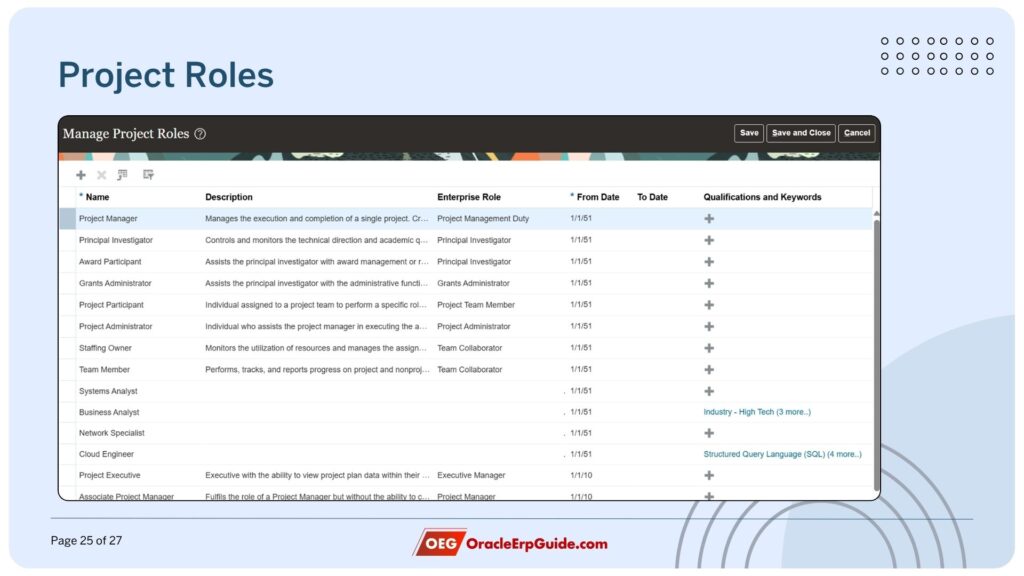
Project Application Administrators can maintain a standardized set of project roles across the organization, ensuring that qualifications for these roles are consistent, and helping in the process of finding and evaluating resources for various projects.